Source Manual Vertical Milling and Drilling Machine for Hardware, Tools, and Workshops
Explore 30 listings for the Manual Vertical Milling and Drilling Machine, comparing specifications like table size, spindle speed, and precision levels. Buyers can evaluate options ranging from desktop units to heavy-duty bed types with various certifications and customization availability.
Key considerations
Products List


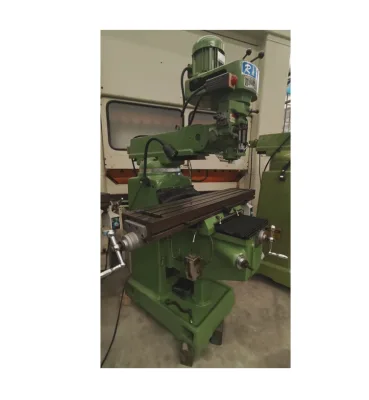


MD30/MD40/MD45 Vertical Manual Drilling and Milling Machine for Desktop
$2000.00 - $5000.00
MOQ: 1 Pieces


Vertical Bench Drilling Milling Machine Mini Milling and Drilling Machine
$1500.00 - $5000.00
MOQ: 1 Pieces

Manual Vertical Milling and Drilling Machine Multifunctional Light Duty Bench Type
$1500.00 - $5000.00
MOQ: 1 Pieces

Multifunctional Bench Type Milling Drilling Machine Vertical Manual Mills
$1500.00 - $5000.00
MOQ: 1 Pieces


Comprehensive Sourcing Guide
Strategic Sourcing Guide for Manual Vertical Milling and Drilling Machines
Understanding the Technical Landscape of Vertical Milling Equipment
When sourcing a Manual Vertical Milling and Drilling Machine, buyers must first establish a clear understanding of the specific technical configurations available in the current market. The core keyword often encompasses a variety of machine structures, ranging from desktop units to heavy-duty bed types. Based on observed product attributes, the market offers machines with distinct structural classifications, including integral milling cutters, indexable types, and specific configurations like lift structures or bed types. The controlling mode for the majority of these units is manual, meaning the operator directly manages the feed and positioning, which requires a high degree of operator skill but offers flexibility for low-volume, high-mix production environments.
A critical technical differentiator is the milling cutter type. Buyers should verify whether the machine supports vertical milling cutters, angle milling cutters, or other specialized tooling. The precision level is another vital specification; the market data indicates a split between "High Precision" and "Normal Precision" models. For applications requiring tight tolerances, such as aerospace component prototyping or precision tooling, the high-precision variant is essential. Conversely, general hardware manufacturing may operate effectively with normal precision units. The table dimensions also vary significantly, with observed specifications including an 800x240mm table size, which dictates the maximum workpiece envelope. Furthermore, the spindle speed range is a key performance metric, with some units offering a broad operational range of 80 to 5400 r.p.m., allowing for versatility in material removal rates across different metals and composites.
The machine's travel capabilities define its workspace utility. Buyers should scrutinize the X, Y, and Z axis travel distances. Specific models in the observed data demonstrate table travel of 810mm in the X-axis, 406mm in the Y-axis, and 410mm in the Z-axis. These dimensions are not merely marketing figures but physical constraints that determine the size of parts that can be machined in a single setup. Additionally, the spindle taper specification is a crucial interface detail that must match the tooling inventory. While some listings note "Other" as the taper type, this requires immediate verification to ensure compatibility with standard tool holders. The weight of the machine, observed at 1250kg for certain models, serves as a proxy for rigidity and vibration damping, which directly impacts surface finish quality and tool life.
Compliance, Certification, and Regulatory Standards
Navigating the regulatory landscape is a non-negotiable aspect of B2B procurement, particularly when importing machinery from international origins. The primary manufacturing origin for the observed pool of machines is China. While this provides access to a vast supply chain, it necessitates rigorous verification of compliance with destination market regulations. The most frequently cited certifications in the current market data include ISO, CE, and GS. It is important to note that while "CE" appears as a common attribute, buyers must distinguish between a self-declared CE mark and a certified compliance document, especially for machinery that may fall under the Machinery Directive in the European Union.
Beyond the basic CE marking, other standards such as SGS and ISO are listed as product standards or certifications. The presence of a GS mark (Geprüfte Sicherheit) indicates a higher level of safety testing, often required for the German market and beneficial for general safety assurance. However, buyers should not assume that every listed product satisfies all these certifications. The data shows variations, with some products listing "ISO CE, GS" while others list only "ISO CE" or "CE." This inconsistency highlights the need for buyers to request specific certification documentation for the exact model being purchased. Relying on a general "CE" claim without a valid test report or certificate of conformity can lead to customs delays or legal liabilities in the importing country.
In addition to safety certifications, buyers should verify the electrical standards. The observed data mentions voltage standards such as 20V and 16V, which appear inconsistent with standard industrial mains voltages (typically 110V, 220V, or 380V). This discrepancy suggests that these figures may refer to control system voltages or specific model identifiers rather than input power requirements. Therefore, the electrical specification must be explicitly confirmed with the supplier to ensure the machine can be safely connected to the local power grid without requiring complex and costly transformer solutions. The absence of a machinery test report for some listed items further underscores the necessity of requesting third-party inspection reports to validate safety and performance claims before finalizing a purchase.
Cost Drivers and Pricing Structure Analysis
The pricing for manual vertical milling and drilling machines exhibits a wide variance, with observed ranges spanning from $1 to $70,000 USD. This broad spectrum is not indicative of a single product category but rather reflects the diversity in machine capacity, precision, and brand positioning. The lower end of the price range likely corresponds to desktop or light-duty units with smaller table sizes and lower weight capacities, suitable for hobbyist or light maintenance work. In contrast, the higher price points are associated with heavy-duty bed-type machines, high-precision models, and those with advanced spindle capabilities and larger travel distances.
Several factors drive the cost of these machines. First, the structural integrity and weight are significant cost drivers. A machine weighing 1250kg, for instance, requires significantly more raw material and manufacturing effort than a lighter desktop unit, directly influencing the final price. Second, the precision level plays a major role; high-precision machines often involve tighter tolerances in casting, machining, and assembly, as well as the use of higher-grade guideways and spindle bearings. Third, the inclusion of specific features, such as a wide spindle speed range (80-5400 r.p.m.) or specialized control modes, adds to the manufacturing complexity and cost.
The minimum order quantity (MOQ) observed in the market is consistently 1 unit. This low barrier to entry allows buyers to purchase single units for immediate deployment or small-scale testing without the need for bulk commitments. However, buyers should be aware that while the MOQ is low, the unit price for a single purchase may be higher than bulk pricing tiers, which are not explicitly detailed in the current data. Additionally, packaging costs can vary; some units are shipped in wooden cases, while others use veneer cases. The choice of packaging affects the shipping weight and potential damage risk, which can indirectly influence the total landed cost. Buyers should also consider the warranty terms, with a standard 1-year warranty observed in the market. Extended warranties or service packages may be available as an upsell, impacting the overall cost of ownership.
Typical Applications and Operational Use Cases
The versatility of manual vertical milling and drilling machines makes them suitable for a wide array of industrial applications. The primary function of these machines is drilling and milling, which covers a vast majority of metalworking tasks in small to medium-sized workshops. The "Object" attribute in the product data lists "Hardware" and "Tool," indicating that these machines are commonly used for the fabrication of hardware components, jigs, fixtures, and tooling inserts. For instance, a machine with a table size of 800x240mm is well-suited for machining medium-sized metal parts, such as brackets, flanges, and engine components.
The specific application is often dictated by the machine's precision and structure. High-precision models are ideal for applications requiring tight tolerances, such as mold making, die casting, and the production of precision gears. The ability to perform both drilling and milling operations in a single setup reduces the need for multiple machines, thereby increasing workflow efficiency. For tool manufacturing, the availability of indexable milling cutters and various cutter types (vertical, angle) allows for complex contouring and face milling operations. The manual controlling mode, while requiring operator intervention, offers the flexibility to handle custom or one-off parts that do not justify the programming time of CNC machines.
Heavy-duty models, characterized by their bed-type structure and significant weight, are designed for more demanding applications. These machines can handle tougher materials and deeper cuts, making them suitable for heavy hardware manufacturing and repair shops. The table travel dimensions (X: 810mm, Y: 406mm, Z: 410mm) provide ample workspace for large workpieces, ensuring that complex assemblies can be machined without frequent repositioning. Furthermore, the range of spindle speeds (80-5400 r.p.m.) allows operators to optimize the cutting parameters for different materials, from soft aluminum to hardened steel, ensuring optimal surface finish and tool life.
Supplier Evaluation and Verification Protocols
Selecting the right supplier is critical to ensuring the reliability and longevity of the purchased machinery. Given the observed origin of these machines as China, buyers should prioritize suppliers who can provide transparent documentation and responsive communication. A key evaluation metric is the availability of video outgoing inspections. Some suppliers in the market offer this service, allowing buyers to visually verify the machine's condition, assembly quality, and functionality before shipment. This is a significant advantage over suppliers who do not provide such verification, as it reduces the risk of receiving damaged or non-compliant goods.
Buyers should also assess the supplier's ability to provide a machinery test report. While the current data indicates that some listings do not have this report available, a reputable supplier should be willing to arrange for a third-party inspection or provide internal quality control records. The absence of a test report is a red flag that should prompt further inquiry into the supplier's quality assurance processes. Additionally, the supplier's responsiveness to certification queries is vital. A trustworthy supplier will readily provide copies of ISO, CE, or GS certificates for the specific model being sold, rather than relying on generic claims.
The warranty terms are another important factor in supplier evaluation. A standard 1-year warranty is observed, but buyers should clarify the scope of this warranty, including what components are covered and the process for claiming repairs or replacements. Suppliers who offer comprehensive after-sales support, including technical assistance and spare parts availability, are preferable. The packaging method, whether wooden case or veneer case, should also be evaluated for its ability to protect the machine during transit. A supplier who invests in robust packaging demonstrates a commitment to product integrity and customer satisfaction.
Quality Control and Long-Term Procurement Considerations
Implementing a robust quality control (QC) strategy is essential for mitigating risks associated with international machinery procurement. Since the market data shows variations in certification and test report availability, buyers should consider engaging a third-party inspection agency to verify the machine's specifications upon arrival or before shipment. This inspection should cover critical dimensions, such as table travel and spindle taper, as well as functional tests to ensure the machine operates within the specified speed ranges and precision levels. The weight of the machine, observed at 1250kg for certain models, should also be verified to ensure it matches the shipping manifest and structural claims.
Long-term procurement considerations extend beyond the initial purchase price. Buyers should evaluate the total cost of ownership, including maintenance, energy consumption, and spare parts availability. The manual controlling mode of these machines implies a reliance on operator skill, which may lead to variability in output quality if not properly trained. Therefore, suppliers who offer training materials or on-site installation support add significant value. The availability of customization is another factor; some products list customization as available, which can be crucial for adapting the machine to specific workflow requirements or integrating it with existing production lines.
The standard of the machine, as indicated by labels like ZX7045 or 25MM, should be cross-referenced with the buyer's internal standards to ensure compatibility. While the data mentions specific model numbers, buyers should not assume these are universal standards but rather manufacturer-specific identifiers. The warranty period of 1 year is a baseline; buyers should negotiate for extended coverage if the machine is critical to production. Finally, the packaging type, whether wooden or veneer case, should be considered in the context of environmental regulations and disposal costs in the destination country. By addressing these quality control and long-term factors, buyers can ensure a successful procurement experience and a reliable addition to their manufacturing capabilities.
FAQs
What certifications are available for these machines?
Available certifications include ISO, CE, and GS marks. Buyers must verify specific documentation for the exact model, as some listings only show ISO CE while others list CE, SGS, and ISO together.
How is the machine structure classified in the market?
Structures vary from desktop and lift types to heavy-duty bed types. The observed data includes integral milling cutter structures and indexable types, with controlling modes typically set to manual for operator flexibility.
What are the standard table dimensions for these units?
Observed table dimensions include an 800 by 240mm size. Travel distances are also critical, with specific models offering 810mm X-axis, 406mm Y-axis, and 410mm Z-axis travel capabilities.
Can buyers find machines with high precision levels?
Yes, high precision models are available alongside normal precision variants. High precision units are essential for tight tolerance applications, while normal precision models suit general hardware manufacturing tasks.
What is the typical warranty period for these machines?
A standard one-year warranty is commonly observed in the market. Buyers should clarify the scope of coverage and after-sales support, as extended service packages may be available as an upsell option.
Which spindle speed ranges are offered by suppliers?
Some units offer a broad operational range from 80 to 5400 revolutions per minute. This versatility allows for optimized cutting parameters across different materials, from soft aluminum to hardened steel.
How are these machines typically packaged for shipping?
Packaging options include wooden cases and veneer cases. The choice of packaging affects shipping weight and damage risk, which can indirectly influence the total landed cost for the buyer.